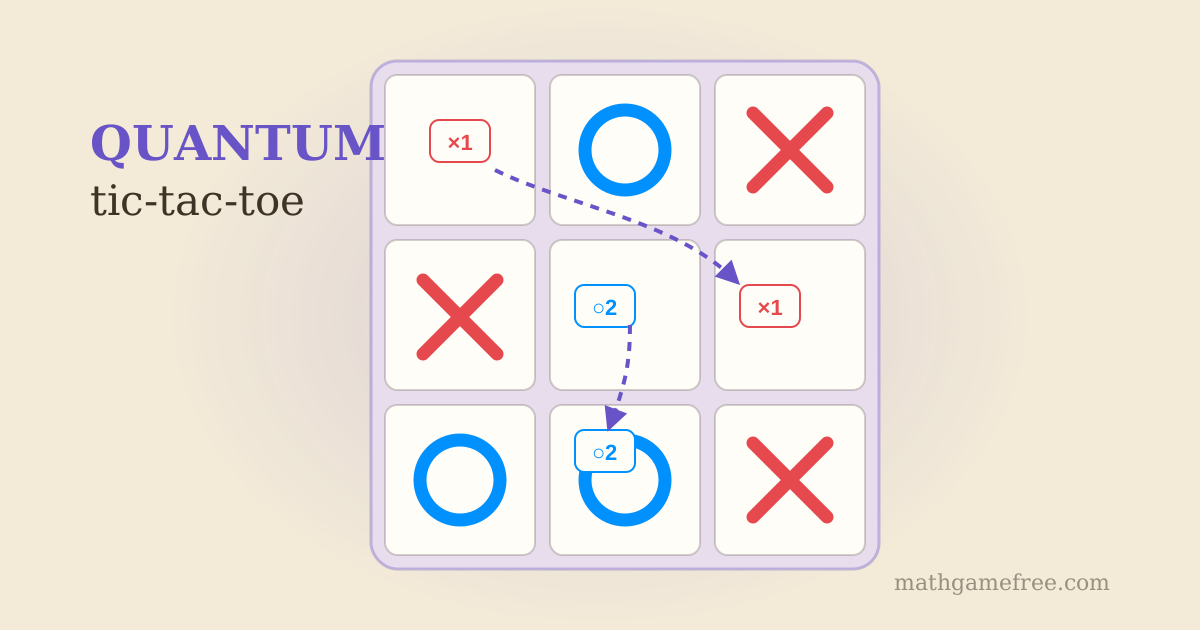
Cells are vertices and each quantum move is an identified undirected edge. Reading that graph lets you predict an entire collapse.
Why a second parallel pair closes a cycle
Adding an edge between vertices that already have a path creates a cycle. Two direct edges with the same endpoints still have different move identities, so the second one closes a cycle.
Why collapse is a chain
Once the cycle edge lands, every other quantum edge in that cell is forced to its other endpoint. Each new classical cell forces more edges until no new assignment remains.
Why winning need not be zero-sum
Every classical mark keeps its original owner. Checking all eight lines after the chain can reveal lines for both players, so a shared win is a rule outcome rather than a move-number tiebreak.